You’re filling out a form.
It asks for the ‘requester’s signature.’
Then the next document spells it ‘requestor.’
Are these two different words, or just two spellings of the same one?
Here’s the quick answer: both ‘requester’ and ‘requestor’ are correct spellings.
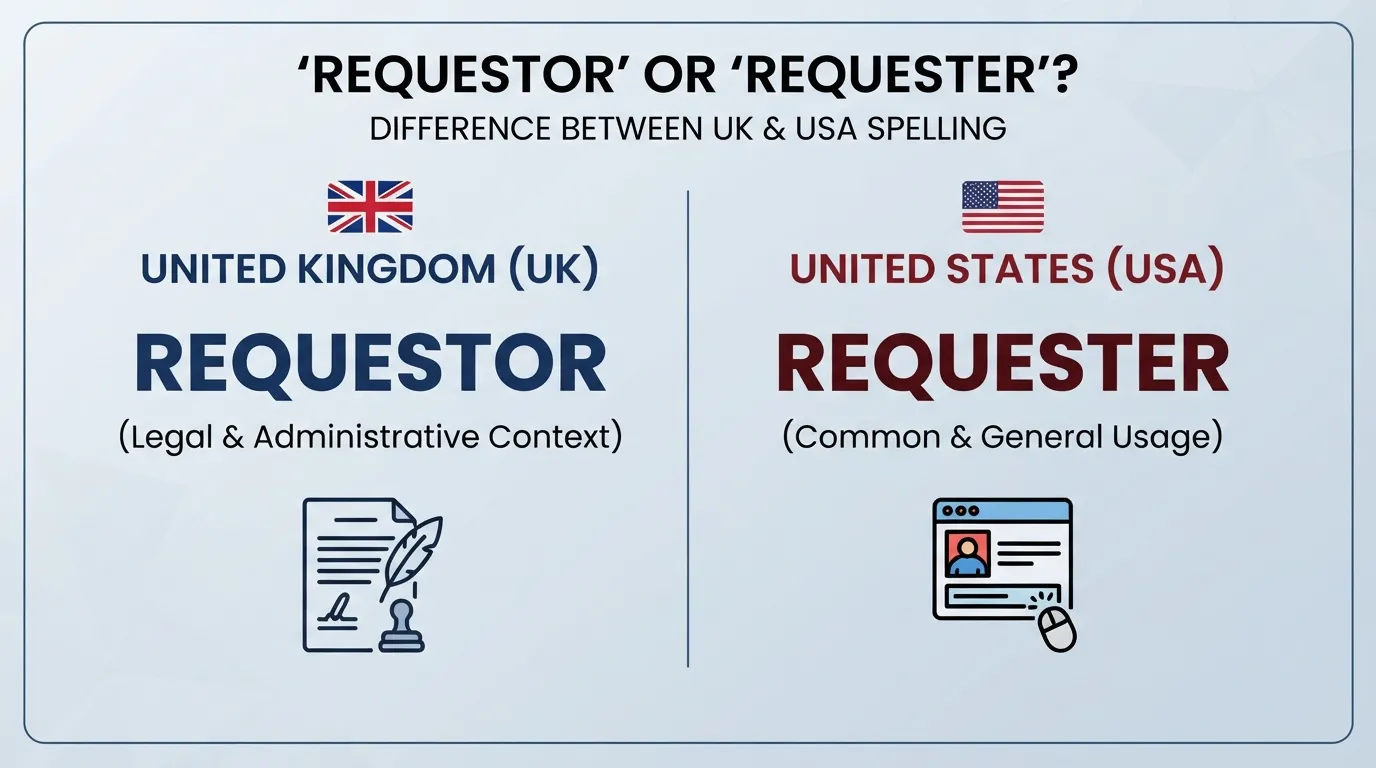
‘Requester’ is more common in general writing, while ‘requestor’ appears more often in technical, legal, and business documents.
Table of Contents
- Did You Know?
- Quick Answer Box
- Quick Rule in One Line
- Why Two Spellings Exist
- Where Each Spelling Is Preferred
- Requester, Requestor, or Requestee? A Third Word Worth Knowing
- Comparison Table
- Memory Trick
- Example Sentences
- Common Mistakes
- When to Use Each Form
- Expert Tip
- FAQs
- Conclusion
- Key Takeaways
Did You Know? 🔍
Both ‘requester’ and ‘requestor’ appear in Merriam-Webster’s dictionary as valid spellings of the same word, listed together as ‘requester or requestor.’ Neither one is officially wrong.
Quick Answer Box
‘Requester’ and ‘requestor’ both mean the same thing: a person who makes a request.
‘Requester’ is the more common, general-purpose spelling, especially in everyday and American English writing.
‘Requestor’ shows up more often in technical, legal, IT, and formal business documents.
⚡ Quick Rule in One Line
Both spellings are correct; use ‘requester’ generally and ‘requestor’ in technical or legal contexts.
Why Two Spellings Exist
English has two competing suffixes for describing someone who performs an action: ‘-er’ and ‘-or.’
‘-er’ is the native English suffix, used in words like baker, writer, and worker.
‘-or’ arrived through Latin and French influence, used in words like director, actor, and inspector.
‘Requester’ and ‘requestor’ both follow valid patterns, which is why dictionaries accept both spellings side by side.
Where Each Spelling Is Preferred
Corpus research on English usage shows ‘requester’ is used more often when referring to an actual person making a request.
‘Requestor’ tends to show up more in technical documentation, referring to a system, process, or formal role, such as in IT tickets or legal filings.
Neither rule is absolute, and many organizations simply pick one spelling and use it consistently in their own style guide.
Requester, Requestor, or Requestee? A Third Word Worth Knowing
This is a different question from the spelling debate above, since ‘requestee’ is a genuinely separate word, not a third spelling of the same thing.
‘Requester’ (or ‘requestor’) is the person making the request.
‘Requestee’ is the person or system the request is directed at, the one receiving or fulfilling it.
For example: “The requester submitted a ticket, and the requestee approved it within the hour.” The two words describe opposite ends of the same transaction, not alternate spellings of one role.
‘Requestee’ is far less common than either ‘requester’ or ‘requestor,’ and some style guides avoid it entirely in favor of a plainer phrase like “the person receiving the request.”
Comparison Table
| Feature | Requester | Requestor |
|---|---|---|
| Suffix origin | Native English (-er) | Latin/French influence (-or) |
| Common in | General and everyday writing | Technical, legal, business documents |
| Dictionary status | Valid, common | Valid, less common |
| Example | The requester asked for a refund. | The requestor’s credentials were verified. |
Memory Trick
Think of ‘-er’ words like ‘writer’ and ‘reader,’ the everyday, native English ending: that’s ‘requester.’
Think of ‘-or’ words like ‘director’ and ‘inspector,’ the more formal, official-sounding ending: that’s ‘requestor,’ often used in official documents.
Example Sentences
- The requester asked for a deadline extension.
- Please contact the requester for further information.
- The requestor’s credentials were verified before processing.
- The system logs each requestor’s IP address for security purposes.
- The requester submitted a formal complaint to HR.
Common Mistakes
There isn’t a true ‘mistake’ here since both spellings are valid, but inconsistency within the same document can look unpolished.
❌ Using ‘requester’ in one paragraph and ‘requestor’ in the next of the same document.
✅ Pick one spelling and use it consistently throughout your writing.
When to Use Each Form
Use ‘requester’ for general writing, customer service contexts, and everyday business communication.
Use ‘requestor’ if your organization’s style guide prefers it, or if you’re writing technical, legal, or IT documentation where it’s already the convention.
Expert Tip 💡
Check your organization’s existing documents or style guide before choosing. If no clear preference exists, ‘requester’ is the safer, more broadly recognized default for general audiences.
FAQs
Is ‘requestor’ a real word?
Yes, it’s a valid, dictionary-recognized spelling, listed alongside ‘requester’ in Merriam-Webster.
Which spelling is more common?
‘Requester’ is generally more common overall, especially for referring to an actual person.
Is one spelling British and the other American?
No, this isn’t a regional US/UK split the way ‘color’ and ‘colour’ are. Both spellings are used in American English, with the difference being more about context than region.
Should I pick one spelling for my company’s documents?
Yes, consistency matters more than which spelling you choose. Pick one and stick with it throughout your organization’s writing.
Does ‘requestor’ imply something more formal or professional?
It tends to appear more in technical, legal, and IT contexts, which can give it a more formal feel, but it isn’t a strict grammar rule.
Is ‘requester’ a word?
Yes. It’s a standard, dictionary-recognized English word, formed by adding the native ‘-er’ suffix to ‘request.’
What does the Oxford Dictionary say about requester vs. requestor?
Oxford’s dictionaries list both spellings as well, similar to Merriam-Webster. Neither spelling is flagged as incorrect; the difference is one of common usage and context, not correctness.
What’s a synonym for ‘requester’?
Depending on context, words like “petitioner,” “applicant,” or simply “the person requesting” can work as synonyms, though none of them are exact one-word substitutes in every setting.
What is the correct spelling of “request” itself?
“Request” is spelled the same way in both American and British English; the spelling differences only appear in the related forms “requester” and “requestor.”
Apa arti requester (requester adalah apa)?
‘Requester’ artinya orang yang membuat permintaan atau permohonan. Dalam bahasa Indonesia, ini sering diterjemahkan sebagai ‘pemohon’ atau ‘pihak yang meminta,’ dan kedua ejaan ‘requester’ maupun ‘requestor’ punya arti yang sama dalam bahasa Inggris.
Conclusion
Both ‘requester’ and ‘requestor’ are correct, valid spellings of the same word.
‘Requester’ tends to dominate everyday and general writing, while ‘requestor’ shows up more in technical and legal documents.
Whichever you choose, consistency within your own writing matters more than picking a single ‘correct’ answer.
Key Takeaways
- Both ‘requester’ and ‘requestor’ are valid, dictionary-recognized spellings.
- ‘Requester’ is more common in general and everyday writing.
- ‘Requestor’ appears more often in technical, legal, and IT contexts.
- ‘Requestee’ is a separate word entirely, referring to the person or system receiving the request, not another spelling of requester/requestor.
- Consistency within a single document matters more than which spelling you pick.

Hi, I’m Ethan Brooks. I create easy-to-follow grammar guides, writing tips, and vocabulary resources to make English learning enjoyable for everyone.