You wrote the effect was immediate, then your spell checker flagged it but it was actually correct.
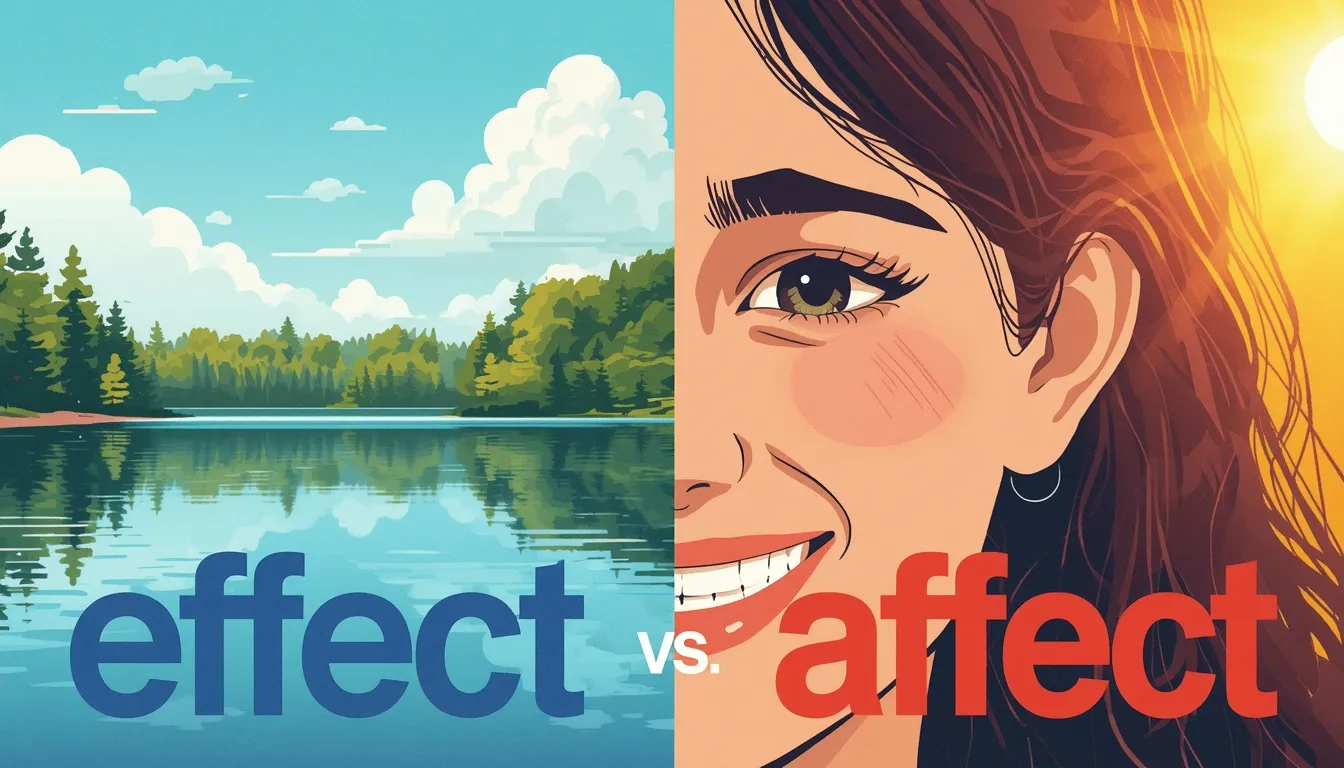
Here’s the quick fix: affect is usually a verb (an action), and effect is usually a noun (a result).
That single rule solves about 95% of cases you’ll ever run into.
But a few sneaky exceptions break this rule completely, and that’s where most writers slip up.
Once you know both the rule and its exceptions, this confusion ends for good.
Quick Answer
Affect usually means to influence and works as a verb ( The rain will affect traffic ).
Effect usually means a result and works as a noun ( The rain had a big effect on traffic ).
Exceptions exist, but this verb-noun rule covers nearly every everyday sentence you’ll write.
Affect vs Effect: The Core Difference
Affect typically functions as a verb, describing how one thing influences or changes another.
Effect typically functions as a noun, describing the result or outcome of that change.
Say the news affected her mood (verb, action), then the effect on her mood was obvious (noun, result).
This action-versus-result distinction handles almost every sentence you’ll encounter in daily writing.
Affect Meaning vs Effect Meaning
The affect meaning, in its common form, is to influence or change something.
The effect meaning, in its common form, is a result that happens because of something else.
A simple way to separate them: affect causes something to happen, and effect is what actually happens.
Keeping this cause-and-result relationship in mind makes every other rule on this page easier to apply.
Grammar Rule Explained
As a verb, affect means to influence, change, or have an impact on something.
As a noun, effect means the result, outcome, or consequence of an action.
A simple test: if you can replace the word with influence, use affect. If you can replace it with the result, use the effect.
This test works for nearly every standard sentence, which is why it’s taught so widely.
Affected or Effected Which One Is Correct?
Affected is the past tense of the verb affect, meaning something was influenced or changed.
Effected is the past tense of the rare verb effect, meaning something was caused or brought about.
Example: The storm affected our travel plans (influenced) versus The new CEO effected major changes (caused to happen).
In everyday writing, affected is far more common effected only appears in formal or business contexts.
The Exceptions Nobody Tells You About
Here’s what most guides skip: both words can flip roles in specific contexts.
Effect as a verb means to bring about or to cause to happen, as in The new manager effected real change.
Affect as a noun is used in psychology to describe an observable emotional expression, as in The patient showed flat affect.
These exceptions are rare in everyday writing but common in academic, psychological, and formal business contexts.
If you’re writing casually, the standard verb-noun rule will almost always be correct.
Affect vs Effect Comparison Table
| Word | Part of Speech | Meaning | Example |
| Affect | Verb (common) | To influence or change | The heat affected the crops. |
| Affect | Noun (rare, psychology) | Observable emotion | Her affect seemed flat. |
| Effect | Noun (common) | A result or outcome | The heat had a serious effect on crops. |
| Effect | Verb (rare, formal) | To bring about or cause | She effected major changes at work. |
Memory Trick (RAVEN)
Use the acronym RAVEN: Remember Affect, Verb, Effect, Noun.
If you can only remember one thing, remember RAVEN.
It covers the standard rule that applies about 95% of the time you’ll write these words.
Real Example Sentences
Using Affect (verb):
- The weather will affect our travel plans.
- Stress can affect your sleep quality.
- His speech affected the entire audience.
- Does caffeine affect your heart rate?
- The medication may affect your appetite.
Using Effect (noun):
- The medicine had a calming effect.
- Her words had a lasting effect on him.
- The new policy took effect immediately.
- Side effects of the drug include drowsiness.
- The special effects in the movie were incredible.
Rare Exceptions:
- The board effected several policy changes this year. (verb)
- The therapist noted the patient’s flat affect during the session. (noun)
Negative Effect or Negative Affect? Positive Effect Explained
Negative effect is almost always correct, since it describes a bad result or outcome, not an action.
Negative affect is only correct in psychology, describing negative emotions someone displays or feels.
Similarly, a positive effect describes a good result, such as Exercise has a positive effect on mood.
For everyday writing, stick with effect whenever you’re pairing it with positive or negative.
Side Effect or Side Affect? Take Effect Meaning
A side effect is always correct, since it refers to an unintended result of a medicine or action.
Side affect is never correct. This is one of the most common misspellings of this phrase online.
Take effect meaning refers to when a rule, law, or change officially begins to apply, as in The new policy takes effect Monday.
Remembering that effect relates to results and outcomes makes both of these phrases easy to get right every time.
Common Mistakes
1. Using effect as a verb by mistake Incorrect: The storm will effect our plans. Correct: The storm will affect our plans.
2. Using affect as a noun by mistake Incorrect: The medicine had a strong affect. Correct: The medicine had a strong effect.
3. Confusing take effect with take affect Incorrect: The new law will take affect next month. Correct: The new law will take effect next month.
4. Forgetting the rare exceptions, not every effect as a verb is wrong in formal writing, it can mean to cause.
When to Use Each Word
Use Affect When:
- You need a verb meaning to influence
- Describing how something changes another thing
- Writing about impact or emotional influence
Examples: affect your mood, affect the outcome, affect sales
Use Effect When:
- You need a noun meaning a result
- Describing an outcome or consequence
- Using the phrase take effect or side effect
Examples: side effect, in effect, personal effects
FAQs
Is it affect or effect in most sentences?
In most everyday sentences, affect is the verb and effect is the noun that covers about 95% of cases.
What does personal effects mean?
Personal effects refers to someone’s personal belongings, using effect as a noun in a specific legal or formal sense.
Can effect ever be a verb? Yes, though rarely. Effect as a verb means to bring about, as in effect change.
Can affect ever be a noun?
Yes, in psychology, affect as a noun describes a person’s observable emotional expression.
What does take effect mean?
Take effect means a rule, law, or change begins to apply, as in The policy takes effect Monday.
Is it a side effect or a side affect ?
It’s always a side effect, since it refers to a result, not an action.
How can I remember affect vs effect quickly?
Use RAVEN: Remember Affect is a Verb, Effect is a Noun.
Why does spell check sometimes accept both words in a sentence?
Because both words are real, correctly spelled words spell check can’t judge context or meaning, only spelling.
Is it affected or effected ?
Affected is the common past tense, meaning influenced. Effected is rare, meaning caused to happen, mostly used in formal writing.
Is it a negative effect or a negative effect ?
The negative effect is correct for everyday writing. Negative affect only applies in psychology, describing displayed emotion.
Conclusion
Affect and effect confuse people because the standard rule has rare, legitimate exceptions.
For almost every sentence you write, affect is the verb and effect is the noun.
Remember RAVEN, and this mix-up stops being a problem in your writing.

Hi, I’m Daniel Carter. I’m passionate about helping learners improve their English with practical grammar tips and clear writing advice.