A coworker once wrote, “I use to walk to school,” and something felt slightly off about it.
The sentence describes a past habit, so it needed “used to” instead.
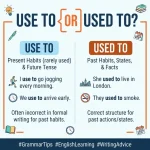
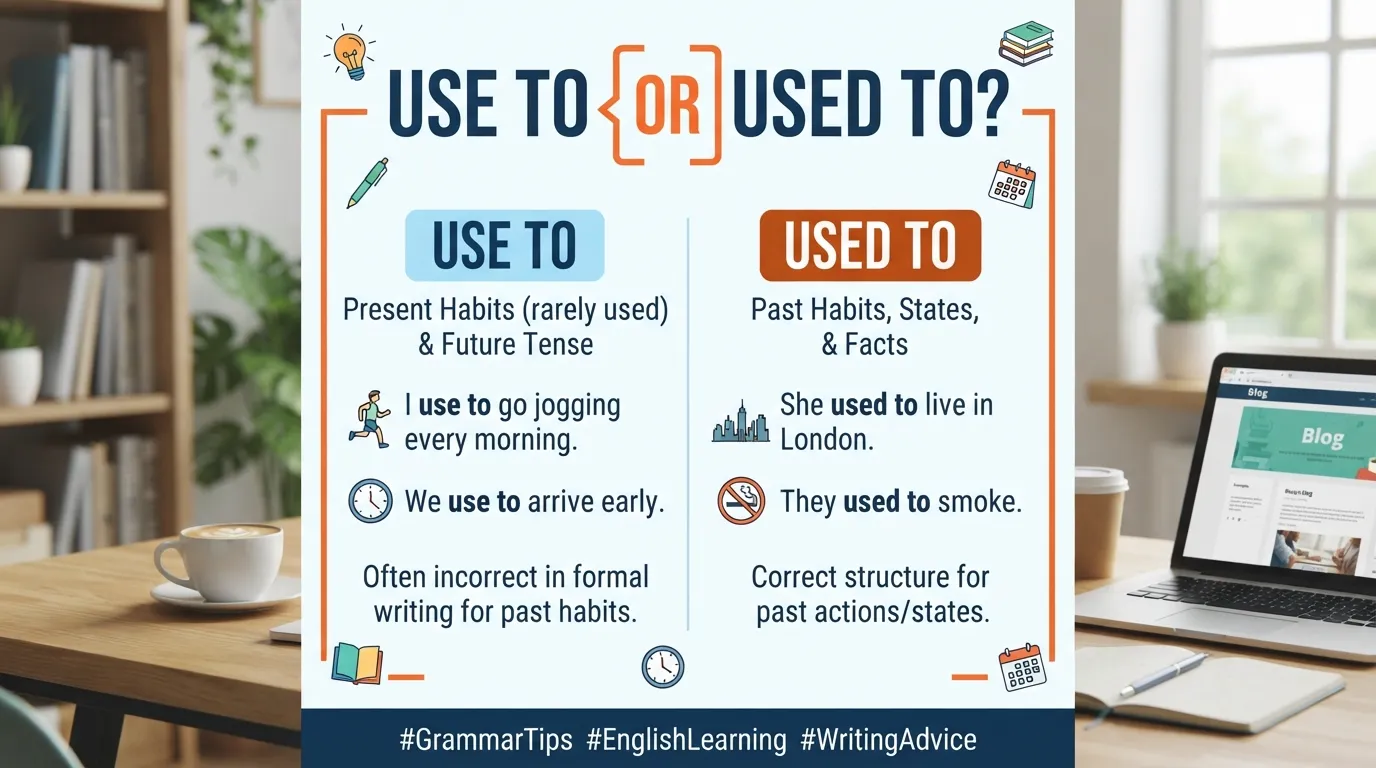
Used to (with a D) is always correct for describing past habits. Use to only appears after “did,” as in “Did you use to live here?” Outside that pattern, “used to” is the correct form.
That one small rule clears up almost every mix-up between these two.
Once you spot the pattern, you’ll never second-guess it again.
Quick Answer Box 🎯
Use “used to” for describing past habits or states, like “I used to play soccer.” Use “use to” only after “did,” as in “Did you use to live here?” Outside questions with “did,” always choose “used to.”
⚡ Quick Rule in 1 Line
Used to (with D) is always correct for past habits; use to only follows “did.”
Use To vs Used To: The Real Difference
It always takes the “D” at the end, regardless of the sentence’s subject.
“Use to” without the “D” only appears correctly after helping verbs like “did,” “didn’t,” or “wouldn’t.”
This happens because “did” already carries the past tense, so the main verb returns to its base form.
“I used to smoke” is correct, since it’s a plain statement about the past.
“Did you use to smoke?” is also correct, since “did” already signals past tense.
The “Did” Test Explained
Here’s the simplest way to check which form fits: look for “did,” “didn’t,” or “wouldn’t” nearby.
If one of these helping verbs appears right before, use “use to” without the D.
If there’s no helping verb like “did,” use “used to” with the D.
For example: “I used to live in Texas” has no helper verb, so “used to” is correct.
Try another: “Didn’t you use to live in Texas?” has “didn’t,” so “use to” is correct here.
This test works consistently across statements, questions, and negative sentences alike.
Used To vs Get Used To vs Be Used To
These three phrases look similar but carry completely different meanings.
“Used to” describes a past habit that no longer happens: “I used to bike to work.”
Mixing these up is a common source of confusion for English learners specifically.
Correct vs Incorrect Examples
| Incorrect | Correct | Why |
|---|---|---|
| I use to play piano as a kid. | I used to play piano as a kid. | No helper verb, needs the D |
| Did you used to live here? | Did you use to live here? | “Did” already signals past tense |
| She didn’t used to like coffee. | She didn’t use to like coffee. | “Didn’t” already signals past tense |
| I am used to running errands. | I am used to running errands. | Correct: familiarity, not habit |
| I use to getting up early now. | I’m used to getting up early now. | Familiarity needs “used to,” not “use to” |
Comparison Table
| Phrase | Meaning | Example |
|---|---|---|
| Used to + verb | Past habit, no longer true | I used to jog every morning. |
| Use to + verb (after did) | Past habit, in a question or negative | Did you use to jog? |
| Get used to + noun/-ing | Becoming familiar with something new | I’m getting used to the cold. |
| Be used to + noun/-ing | Already familiar with something | She is used to the noise. |
Memory Trick to Never Mix Them Up
Think of it this way: “Did” steals the past tense, so the verb loses its D.
Once “did” appears in the sentence, it already shows the sentence is about the past.
That means “use” doesn’t need its own “D” anymore, since “did” is doing that job.
Without “did,” the verb has to carry its own past tense, so it keeps the “D” in “used.”
Picture “did” as borrowing the D from “use,” leaving it bare in questions and negatives.
Example Sentences
I used to live in a small town growing up.
Did you use to play any sports in school?
She used to work at a bakery downtown.
We didn’t use to have internet at home.
He used to collect stamps as a hobby.
Did they use to travel every summer?
I’m getting used to this new keyboard.
My grandmother used to tell the best stories.
Didn’t you use to have longer hair?
They used to live right next door to us.
I am used to working late nights now.
Did she use to sing in a choir?
We used to walk everywhere before we had a car.
He’s still getting used to his new job.
I used to be afraid of the dark as a kid.
Common Mistakes to Avoid
Many writers drop the “D” even when there’s no “did,” “didn’t,” or “wouldn’t” nearby.
This creates the common error “I use to” instead of the correct “I used to.”
Others mistakenly add the “D” after “did,” writing “did you used to” instead of “did you use to.”
Confusing “used to” with “get used to” or “be used to” also causes frequent mix-ups.
Remember that “get used to” and “be used to” describe familiarity, not repeated past action.
Always check for a nearby “did” before deciding whether to drop the “D.”
When to Use Each Form
Use “used to” for plain statements about past habits or states that are no longer true.
the Use “use to” only in questions or negatives that already contain “did,” “didn’t,” or “wouldn’t.”
When unsure, check for “did” nearby, and match the form based on that simple test.
FAQs ❓
Is it “I use to” or “I used to”?
It’s “I used to,” since there’s no “did” nearby. The “D” stays unless “did,” “didn’t,” or “wouldn’t” appears first.
Is “did you used to” ever correct?
No, “did you use to” is correct. “Did” already carries the past tense, so “use” drops its “D.”
What’s the difference between “used to” and “get used to”?
“Used to” describes a past habit that stopped. “Get used to” describes becoming familiar with something new or ongoing.
Is “didn’t used to” correct?
No, “didn’t use to” is correct. “Didn’t” already signals past tense, so “use” doesn’t need the “D.”
Can “used to” describe present habits?
No, “used to” only describes past habits or states that are no longer true today.
Is “would” the same as “used to”?
Not exactly. “Would” also describes repeated past actions but can’t describe past states, unlike “used to.”
Why does “did” remove the D from “use”?
“Did” already shows the sentence is past tense, so the main verb returns to its base form without “-d.”
Is “used to” formal or casual?
“Used to” works in both casual and formal writing, making it a versatile choice for describing past habits.
Conclusion
Use to and used to follow one clear, testable rule.
Use “used to” for plain statements about the past.
Check for that helping verb, and this pair becomes simple every time.
Use “use to” only after “did,” “didn’t,” or “wouldn’t.”

Hi, I’m Ethan Brooks. I create easy-to-follow grammar guides, writing tips, and vocabulary resources to make English learning enjoyable for everyone.